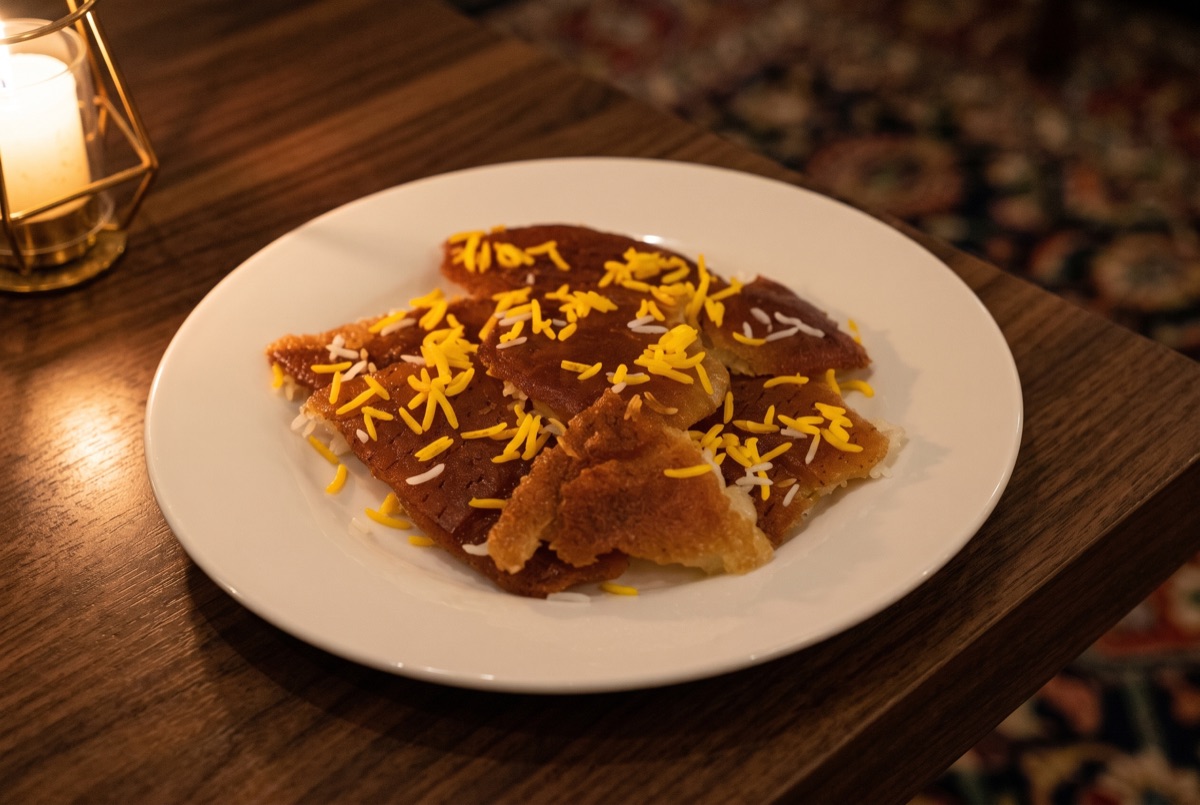
Tahdig (tah-DEEG) is the crispy, golden crust of rice that forms at the bottom of a Persian rice pot, the single most fought-over bite at any Iranian table. The word means "bottom of the pot" in Farsi, and getting it right is how Persian cooks are judged.
How tahdig is made
Basmati rice is parboiled, drained, then returned to the pot over a layer of oil, butter, or yogurt-saffron batter. The pot steams low and slow under a cloth-wrapped lid. While the top stays fluffy and separate, the bottom layer slowly fries into a glassy, deep-gold disk, crackly outside, chewy at the edges, perfumed with saffron.
Some kitchens line the pot with lavash bread or sliced potato instead, so the "tahdig" comes out as crisp bread or golden potato coins. All three styles are traditional.
Why everyone fights over it
A full pot of rice yields only one thin layer of tahdig, there is never enough. In Iranian homes it's broken into shards and offered to guests first; being handed the biggest piece is a small act of love. That scarcity is exactly why it tastes better than it has any right to.
How to order it at M Cafe & Grill
We serve Tahdig as its own dish, crowned with your choice of one, two, or three of our slow-simmered stews, so the crisp rice soaks up Ghormeh Sabzi, Gheymeh, or Fessenjon. It arrives crackling; it leaves in fragments.
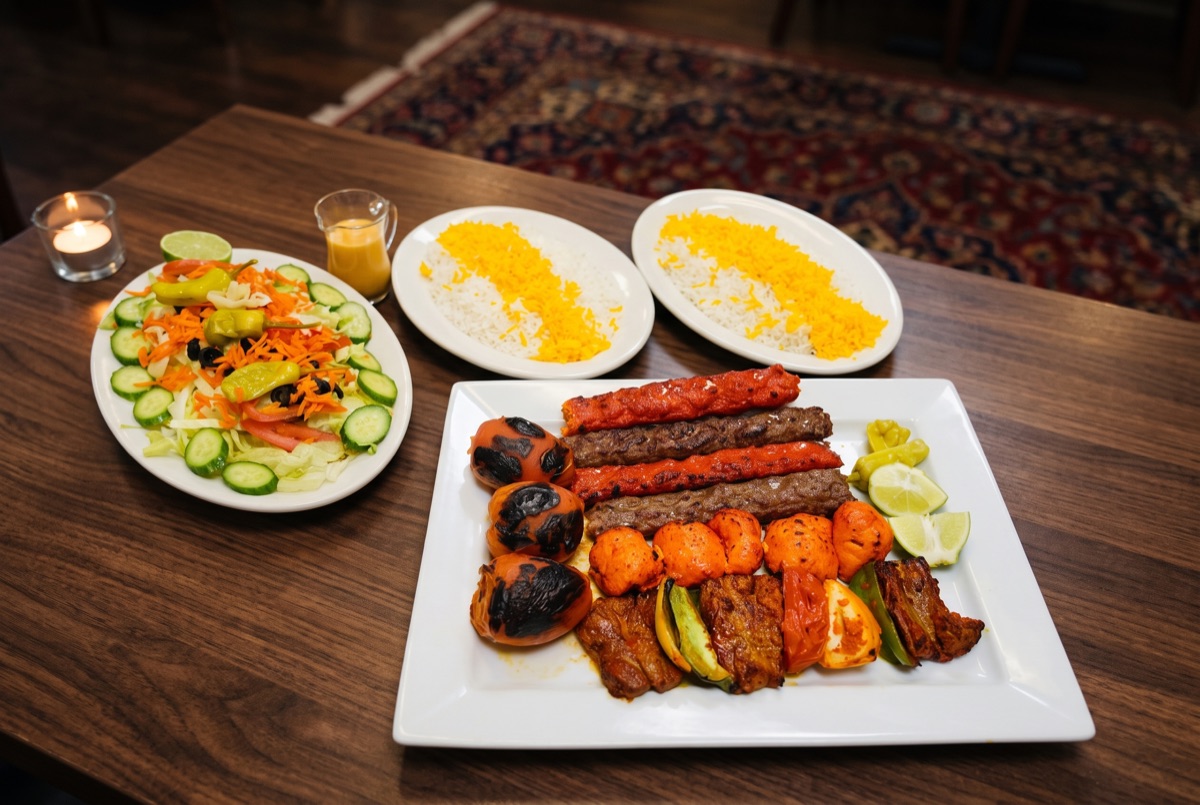
Pair it with a kebab plate for the full spread, or come at lunch and make it the table's shared starter. See the full menu or order for pickup.